Brevo and Omnisend present themselves as accessible and beginner-friendly email marketing tools with clear workflows, but they’re built with different audiences in mind. Brevo focuses on simplicity, smooth execution, and a balanced mix of affordability and utility. Omnisend, on the other hand, aligns itself with ecommerce-driven brands needing specialized automation, personalized workflows, and omnichannel capabilities.
Both platforms have clean editors, helpful guidance, and dependable sending performance, but their strengths diverge when you examine how they handle design, segmentation, analytics, and value. This comparison breaks down those differences to help you decide which is the best fit for your campaigns and growth stage.
Who Should Use Which?
- Brevo is Best For:
- Beginners, solo creators, and small teams needing fast, simple email creation
- Businesses wanting an affordable plan with scalable sending limits
- Users needing clean templates, easy drag-and-drop editing, and balanced simplicity
- Marketers wanting stable deliverability and essential automation without complexity
- Omnisend is Best For:
- Ecommerce stores & DTC brands looking for revenue-focused email + SMS automation
- Shopify/WooCommerce merchants with product-based triggers and automated workflows
- Retail brands using email + SMS + push for multi-channel engagement
- Teams focused on cart recovery, browse-abandonment, and ecommerce-specific lifecycle triggers
Quick Comparison
| Criteria | Brevo | Omnisend |
|---|---|---|
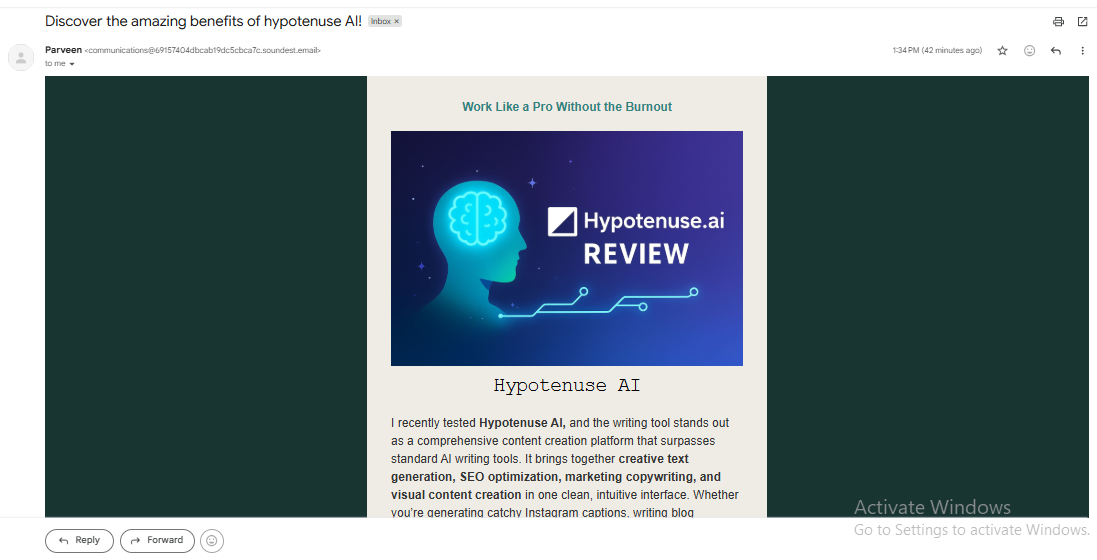
| Ease of Use | Clean, modern, beginner-friendly editor with smooth drag-and-drop experience | Simple, streamlined setup built for ecommerce-driven workflows |
| Template Variety & Design | Offers an efficient editor with flexible layout control; supports HTML blocks for custom editing | Over 250+ ecommerce-focused templates; visually rich, mobile-responsive designs |
| Deliverability | Consistent inboxing; stable performance with ready domain setup and helpful spam-related insights | Excellent inbox placement; quick dispatch time and very stable delivery during testing |
| Reporting & Analytics | Highlights essentials like opens, clicks, bounces, unsubscribes & engagement tracking; exportable as PDF/CSV | Real-time reporting with detailed ecommerce-linked insights & automation performance metrics |
| Free Plan | Free plan available with generous daily sending and unlimited contacts | Free plan available with limited monthly email sends |
| Starting Price (Paid) | Paid tier starts affordably with scalable sending volumes | Paid tier supports monthly sending packs + automation-heavy workflows |
| Best For | Freelancers, solopreneurs, small brands wanting affordable, simple, stable email campaigns | Ecommerce stores, DTC brands, and businesses needing email + SMS + automation depth |
| Key Strength | Affordability, clean editor experience, and strong daily send limits | Ecommerce-centric automations, segmentation depth, and multi-channel workflows |
| Key Limitation | Limited segmentation & automation on free plan; advanced features locked to paid tiers | More expensive at scale; template editor can feel richer but heavier for beginners |
Evaluation Criteria (How We Compare)
We compared Brevo and Omnisend across five essential parameters that define how well an email marketing platform performs in real-world use:
- Email Designing & Templates – The creative flexibility, template variety, and customization depth each platform offers.
- Contact List Management – The efficiency and depth of managing subscribers, including segmentation, tagging, imports, and behavioral targeting.
- Campaign Execution – How quickly and reliably each platform sends campaigns, the ease of automation setup, and overall consistency in deliverability.
- Reports & Analytics – The quality, visualization, and actionability of data each platform provides from open and click tracking to conversions, heatmaps, and exportable reports; and how easily marketers can derive insights to improve performance.
- Pricing & Value – Affordability, plan transparency, and the balance of included features at each tier.
Email Designing & Templates
Brevo
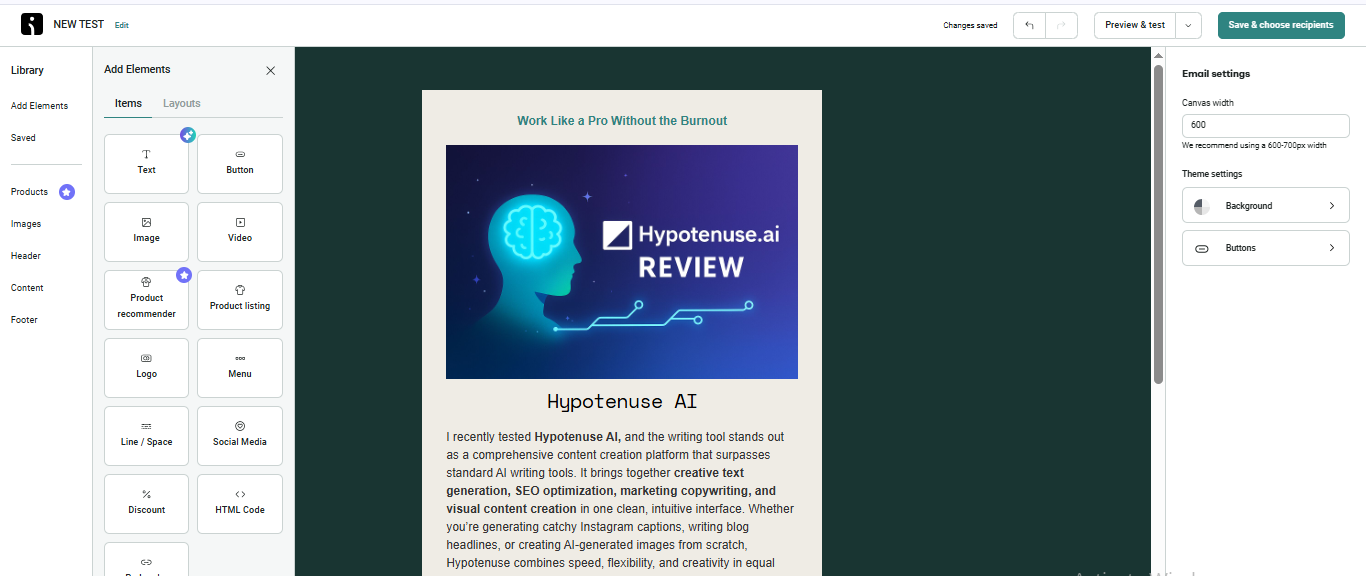
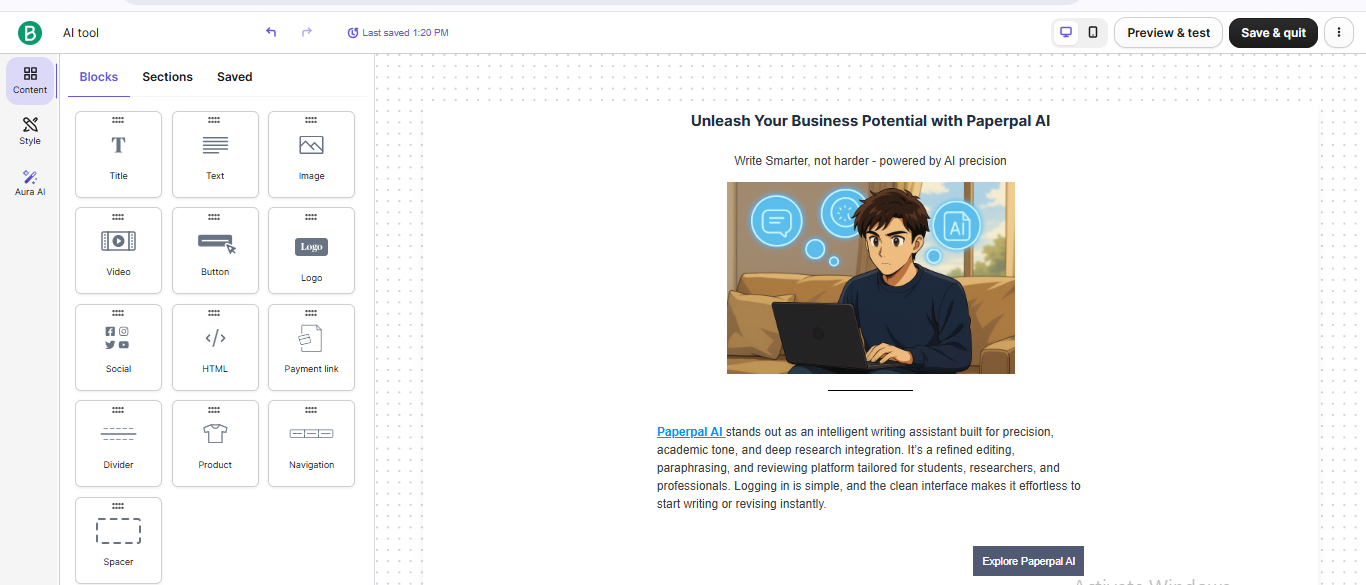
Brevo’s editor emphasizes simplicity and clarity, making it ideal for users who want to build campaigns quickly without complexity. The drag-and-drop layout handles blocks for text, images, buttons, and social elements smoothly, and spacing adjustments remain intuitive. Template options are modern and neatly organized, including pre-made newsletter formats, promotional layouts, and announcement-style designs.
Brevo also offers multiple preview modes, strong mobile responsiveness, and useful reusable blocks. The customization depth is clean but not overly advanced, ideal for creators wanting fast execution.
Omnisend
Omnisend focuses strongly on ecommerce-ready design, offering over 250 templates with product-centric layouts, promotional formats, and highly visual designs suited for online stores. Templates adapt automatically for mobile, and media handling is smooth such as image cropping, resizing, or replacing product blocks. The editor has more layout diversity and cleaner pre-structured ecommerce sections, helping users insert product cards or sale highlights quickly without manual arrangement.
Contact List Management
Brevo
Brevo’s contact handling is clean and very approachable. Importing data from CSV, XLSX, or copy-paste is straightforward, and the platform offers an immediate view of subscriber activity such as opens and clicks. Brevo removes invalid or hard-bounced emails and keeps lists optimized without requiring manual cleanup. Tagging and segmentation exist but remain basic on the free and entry plans, making advanced segmentation possible only in higher tiers.
Omnisend
Omnisend provides structured list management with strong hygiene and segmentation support. Imports from platforms like Mailchimp or Klaviyo work reliably, and duplicate entries are removed automatically. Its segmentation features are more dynamic, allowing breakdowns based on engagement frequency, shopping behaviour (for ecommerce), and campaign interaction. Personalization also extends deeper, enabling targeted audience refinement without extra configuration.
Campaign Execution
Brevo
Brevo’s campaign process feels smooth and steady, even during tests with multiple campaigns running in parallel. Its domain authentication supports SPF and DKIM, improving overall deliverability. Test emails send instantly, and full sends typically dispatch within 8–10 minutes depending on list size. The preview and test tools are well-structured, and the scheduling workflow is intuitive.
Omnisend
Omnisend’s campaign execution places emphasis on streamlined flows and ecommerce-specific triggers. Building a campaign is direct: users select templates, refine content, choose recipients, and schedule the send. It supports multi-channel automations (email, SMS, push notifications) and includes pre-built ecommerce workflows such as cart abandonment, order confirmations, and product-based triggers. Deliverability performance during testing was steady, and the platform handled dynamic content blocks smoothly.
Reports & Analytics
Brevo
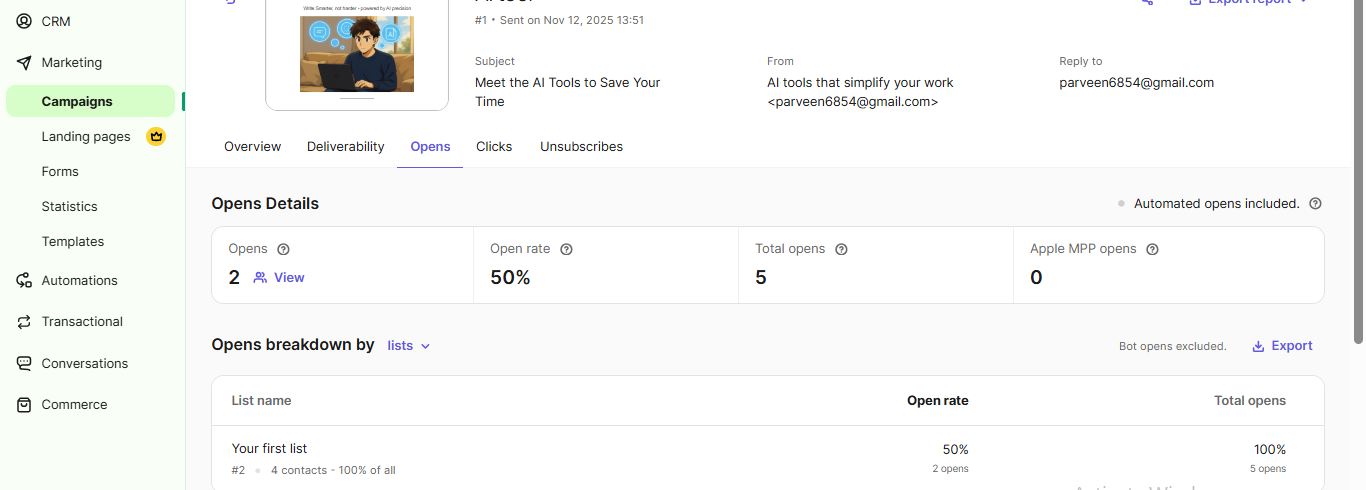
Brevo’s reporting focuses on essentials presented clearly including open rates, click rates, bounce metrics, and unsubscribe patterns. All reports load quickly and allow export as PDF or CSV. Brevo also offers scheduled summaries that can be sent to your inbox daily or weekly. Engagement visibility is straightforward, letting users see test-versus-final results and compare performance across campaigns. While it does not include advanced funnel or ecommerce analytics, it provides reliable campaign-level insights.
Omnisend
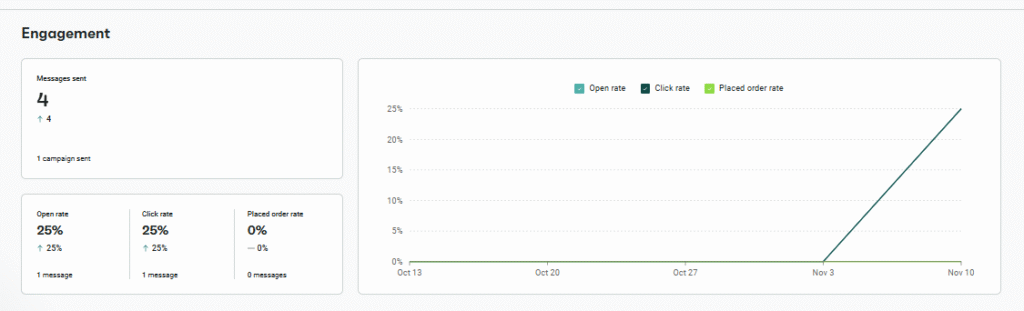
Omnisend offers a more comprehensive analytics environment. The dashboard visualizes opens, clicks, conversions, unsubscribes, and revenue attribution (for ecommerce). Reports can be exported in PDF or XLSX formats. Automation-level reports show the performance of individual workflows, triggers, and message steps. Ecommerce insights like product clicks, segment-wise purchases, and automation-driven revenue, make Omnisend especially strong for merchants tracking ROI and store behaviour.
Pricing & Value
Brevo
Brevo positions itself as one of the most flexible pricing structures, offering a generous free plan and pay-as-you-go sending that supports up to 300 emails per day. Higher tiers introduce features like A/B testing, advanced segmentation, automation sequences, and transactional email capabilities. The Professional Plan adds priority sending and enhanced reporting. Brevo’s value is strongest for small teams, creators, and businesses wanting affordability without sacrificing usability.
Omnisend
Omnisend’s pricing is built around scaling ecommerce brands. The free tier includes up to 500 monthly emails and basic automation. The Standard Plan expands automation depth, adds push notifications, improves customer segmentation, and increases monthly email volume. The Pro Plan includes advanced workflows, SMS/MMS credits, and revenue-based analytics. Omnisend’s structure suits online stores needing multi-channel marketing and predictable growth-aligned pricing.
| Scenario | Best Choice |
|---|---|
| Testing before paying | Brevo — More generous free plan with up to 300 emails/day and easier early experimentation. |
| Fastest setup for beginners | Brevo — Cleaner, simpler drag-and-drop editor suitable for quick campaign creation. |
| Scaling with a growing ecommerce list | Omnisend — Strong ecommerce-specific workflows and predictable sending structure. |
| Designing ecommerce newsletters with product blocks | Omnisend — Built-in product pickers, category blocks, and visually rich store-focused templates. |
| Lightweight automation needs | Brevo — Simple automation sequences suitable for small workflows. |
| Advanced automation + multi-channel triggers | Omnisend — SMS + email workflows, automation splits, triggers, and personalization depth. |
| Consistent deliverability for ecommerce campaigns | Omnisend — Stable inboxing performance and delivery tracking optimized for ecommerce. |
| Budget-friendly, predictable long-term pricing | Brevo — Pricing stays affordable for small teams and creators. |
Final Verdict
Brevo stands out for its clean design experience, stable deliverability, intuitive workflows, and pricing flexibility, making it an excellent choice for beginners, small businesses, and creators wanting straightforward email marketing. Omnisend, however, is built with ecommerce acceleration in mind, offering deeper automation, multi-channel messaging, advanced reporting, and specialized workflows that support online stores at every growth stage. Your ideal pick depends on whether your priority is simplicity and value (Brevo) or data-driven automation and ecommerce-ready journeys (Omnisend).
On this page
Winner Snapshot: Brevo vs Omnisend
| Scenario | Best Choice |
|---|---|
| Testing before paying | Brevo — More generous free plan with up to 300 emails/day and easier early experimentation. |
| Fastest setup for beginners | Brevo — Cleaner, simpler drag-and-drop editor suitable for quick campaign creation. |
| Scaling with a growing ecommerce list | Omnisend — Strong ecommerce-specific workflows and predictable sending structure. |
| Designing ecommerce newsletters with product blocks | Omnisend — Built-in product pickers, category blocks, and visually rich store-focused templates. |
| Lightweight automation needs | Brevo — Simple automation sequences suitable for small workflows. |
| Advanced automation + multi-channel triggers | Omnisend — SMS + email workflows, automation splits, triggers, and personalization depth. |
| Consistent deliverability for ecommerce campaigns | Omnisend — Stable inboxing performance and delivery tracking optimized for ecommerce. |
| Budget-friendly, predictable long-term pricing | Brevo — Pricing stays affordable for small teams and creators. |
Tags: comparison