We may earn affiliate commissions for the recommended tools. Learn more.

Writeless vs HyperWrite (2025): Key Differences, Features Compared

AI writing tools continue to transform how individuals and businesses create content, but not all tools serve the same purpose. While some focus on simplicity and affordability, others emphasize advanced personalization and adaptive workflows. Writeless AI and HyperWrite AI represent two contrasting approaches in the AI writing market. In this comparison, we’ll break down their ease of use, output quality, features, pricing, and value to help you decide which tool is the better fit.

Who Should Use Which?

Quick Comparison

FeatureWriteless AIHyperWrite AI
Ease of UseClean, straightforward, minimal setup requiredIntuitive UI, adaptive prompts, but less structured
Core FeaturesTemplates for emails, captions, product copyAutocomplete, rewriting, adaptive writing partner
Output QualitySimple, clear, but limited creativityMore natural, engaging, and adaptive writing
PricingBudget-friendly, free + low-cost tiersFree plan + premium tiers (slightly pricier)
Best ForBeginners, casual users, budget-conscious teamsCreatives, bloggers, professionals needing depth

Evaluation Criteria (How We Compare)

We compare Writeless and HyperWrite across four key parameters:

  • Ease of Use – How simple and intuitive it is to start creating content.
  • Features – The strength of AI tools, including bulk generation, adaptive prompts, and integrations.
  • Output Quality – Consistency, creativity, and accuracy of generated content.
  • Pricing & Value – Affordability of plans, free offerings, and long-term value for individuals or teams.

Ease of Use

Writeless AI
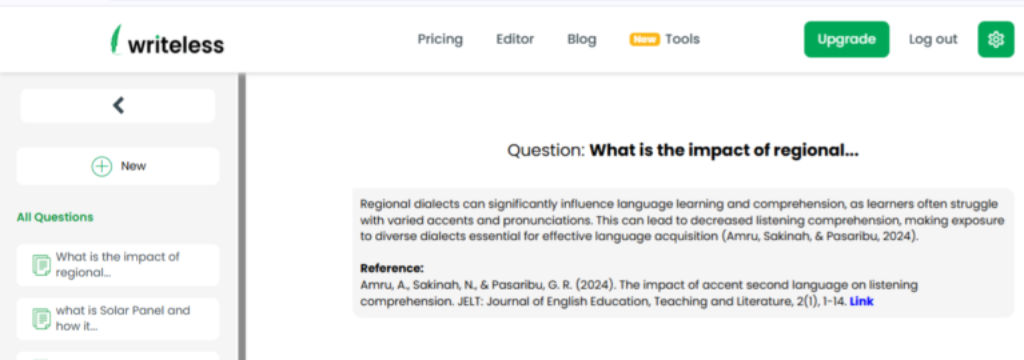
Writeless AI is designed with simplicity at its core. The platform provides a clean, distraction-free dashboard where users can instantly access ready-to-use templates for emails, social captions, outlines, and basic product descriptions. This minimal design means even first-time users can produce drafts without spending time learning the tool. Navigation is straightforward, and there are very few barriers to entry, making it highly suitable for beginners or small businesses that don’t want to invest time in training. The downside, however, is that its simplicity comes at the cost of control—advanced users may find the lack of deeper customization and workflow features limiting.

HyperWrite AI
HyperWrite AI takes a different approach by offering a more fluid, adaptive interface that acts like a true co-pilot for writing. Instead of static templates, it provides real-time contextual suggestions, adaptive prompts, and smart autocomplete features. For users who want to go beyond pre-set structures, this flexibility is highly empowering—it feels like brainstorming with a digital partner who understands context. However, for absolute beginners, the lack of rigid templates can be a challenge. Too many options and the adaptive nature of suggestions may feel overwhelming, especially for users who just want a simple tool for basic drafts.

Output Quality

Writeless AI
Writeless AI is best suited for straightforward, short-form writing. It generates drafts that are clear, professional, and ready to be used in business settings such as social media captions, ad copies, and product blurbs. The tone is consistent and predictable, making it reliable when you need quick, no-frills content that fits a professional format. However, the trade-off is that its writing often lacks depth, nuance, and creativity—especially in longer projects like blogs, storytelling, or thought-leadership articles. For users who expect more personality or originality in their text, Writeless may feel too rigid and mechanical.

HyperWrite AI
HyperWrite AI delivers a more dynamic, human-like flow in its outputs. The platform shines when it comes to producing blogs, creative content, and narrative-driven pieces that require an engaging voice. Its adaptive learning and contextual awareness allow it to build continuity across sections, which makes the text feel authentic and less robotic compared to many AI tools. On the flip side, because HyperWrite leans heavily on creativity, there’s a higher chance that outputs will need some manual fact-checking, editing, or polishing to ensure accuracy and alignment with brand guidelines.

Features & Functionality

Writeless AI
Writeless AI is built with simplicity at its core, offering a compact toolkit focused on everyday content needs. Users get access to ready-made generators for emails, captions, outlines, and short product descriptions, which makes it very beginner-friendly. This approach ensures that even non-technical users can create drafts in minutes without feeling overwhelmed by options. However, its feature set is limited—it doesn’t provide advanced workflows, personalization, or tools that support deeper content marketing strategies. For teams or professionals seeking scalability or customization, Writeless may feel too restrictive and basic.

HyperWrite AI
HyperWrite AI takes a more expansive approach, positioning itself as an adaptive writing partner rather than just a template-based tool. It offers custom personas, real-time adaptive prompts, and advanced rewriting options, which allow users to shape content in their own style. Features like predictive suggestions, brainstorming aids, and context-sensitive completions make it versatile for a variety of scenarios—from creative writing and professional communication to long-form storytelling. This adaptability makes it a powerful choice for users who need more flexibility, but it may feel overly complex for those who prefer simple, plug-and-play outputs.

Pricing & Value

Plan / ToolWriteless AIHyperWrite AI
Free Plan✅ Available (basic drafts with limited daily words)✅ Available (basic AI tools & suggestions)
Entry Paid Tier~$10/month (Starter – limited features, suitable for light use)$16/month (Premium – 250 AI messages, 3 custom personas)
Mid/Pro Tier~$29/month (Pro – more templates, higher word count, export options)$29/month (Ultra – unlimited messages, 10 custom personas, early access)
Enterprise❌ Not available (no custom pricing; fixed plans only)✅ Custom pricing for agencies & enterprise users
Best ForBeginners, casual users, and small teams needing quick, no-fuss contentProfessionals, freelancers, and creatives seeking adaptive AI functionality
Overall Value💡 Budget-friendly for beginners who want simplicity💡 Pricier, but stronger for advanced, adaptive, and personalized writing help
*Pricing Plans if billed Annually

Writeless AI
Writeless AI is designed to be one of the most budget-friendly tools on the market. It offers a free plan with limited credits, allowing beginners to test the platform before upgrading. Paid tiers start at a very low monthly fee, often around $10, making it highly accessible for students, freelancers, and small teams. The pricing is straightforward, with no hidden complexities, and it scales just enough to cover light-to-moderate writing needs. However, it lacks enterprise-level plans and advanced collaboration options, which means it’s not ideal for businesses or agencies managing large content volumes.

HyperWrite AI
HyperWrite AI also provides a free plan, but its true value comes with paid tiers. The Premium plan ($16/month) unlocks 250 AI messages and 3 custom personas, while the Ultra plan ($29/month) includes unlimited AI messages, 10 personas, and access to experimental features that keep evolving. This makes HyperWrite more versatile for professionals who want adaptive support. Enterprise-level pricing is also available, making it suitable for bigger organizations. While the higher tiers are more expensive compared to Writeless, the depth of functionality and adaptability justify the cost for serious users who want more than basic templates.

ScenarioBest Choice
Testing before payingBoth – Free plans available for beginners
Budget-friendly starter useWriteless AI (simpler, cheaper starter plan with ready-to-use templates)
Adaptive, personalized writingHyperWrite AI (custom personas + adaptive prompts that adjust to style)
Team collaboration & scalingHyperWrite AI (multi-user support, enterprise pricing)
Creative brainstorming & idea genHyperWrite AI (strong autocomplete + experimental features)
Long-term cost efficiencyWriteless AI (better for solo writers and small teams with limited budgets)

Final Verdict

Both Writeless AI and HyperWrite AI bring unique strengths to the table, but their audiences are different. Writeless AI is best suited for beginners, casual users, and teams that need simple, quick drafts without paying much. It’s functional, consistent, and affordable. HyperWrite AI, on the other hand, is built for professionals, creatives, and advanced users who want adaptive AI support that grows with their style

On this page

Winner Snapshot: Writeless vs Hyperwrite

ScenarioBest Choice
Quick drafts, captions & product blurbsWriteless AI
Short-form ads, emails, and outlinesWriteless AI
Blogging, storytelling, and creative draftsHyperWrite AI
Adaptive writing partner for idea expansionHyperWrite AI
Professionals needing multi-user collaborationHyperWrite AI
Solo writers seeking simplicity & speedWriteless AI

Tags:

We will be happy to hear your thoughts

Leave a reply

Diztel
Logo